


World Health Organization
Lived experience informing World Patient Safety Day 2026: Safe care for noncommunicable diseases
Meaningful Engagement of People with Lived Experiences
30 Mar 2026

World Health Organization | 04 May 2026
In Ghana, the Multisectoral National Steering Committee on NCDs convenes government and civil society organizations to support coherent policies and coordinated action for the prevention and control of noncommunicable diseases (NCDs). Through a new project designed to strengthen multisectoral governance mechanisms in low- and middle-income countries, the World Health Organization (WHO) is supporting the Ministry of Health to expand the Committee’s role and reach.
Noncommunicable diseases (NCDs), such as cardiovascular diseases, cancers, and diabetes pose a growing health and development concern in Ghana, accounting for 47% of all deaths in the country.
Addressing NCDs and their major drivers – unhealthy diets, physical inactivity, tobacco consumption and the harmful use of alcohol– requires coherent, coordinated policies and interventions from government sectors that shape safe environments and reduce exposure to NCD risk factors.
Ministries of education and trade, for instance, can promote healthy school meals and commit the food production industry to reduce the level of sodium in their products. Ministries of urban planning, transportation and sports can facilitate physical activity by designing walkable cities, investing in safe cycling infrastructure, and ensuring equitable access to recreational spaces. Government agencies in charge of communication and digital infrastructure can support NCD prevention through dedicated public awareness campaigns or by providing digital solutions for data sharing and evidence-informed decision-making.
A multisectoral, whole-of-government approach is a core pillar of Ghana’s 2021 national NCD policy and the 2022-2026 Strategic Plan for NCD prevention and control. Since 2022, a multisectoral Steering Committee chaired by the Ministry of Health and supported by WHO Ghana has been convening different government sectors and civil society organizations.
The newly founded Multisectoral National Steering Committee on NCDs first supported the implementation of the 2023 Ghana STEPS Survey, a risk factor surveillance exercise collecting country-wide, standardized data on major behavioural and biological risk factors and providing critical evidence for a multisectoral policy responses. Over the past years, the Steering Committee rallied broader, cross-sectoral support and high-level leadership for the national NCD agenda, and formed three sub-committees to develop activities on advocacy and public awareness, resource mobilization, and disease-specific initiatives.
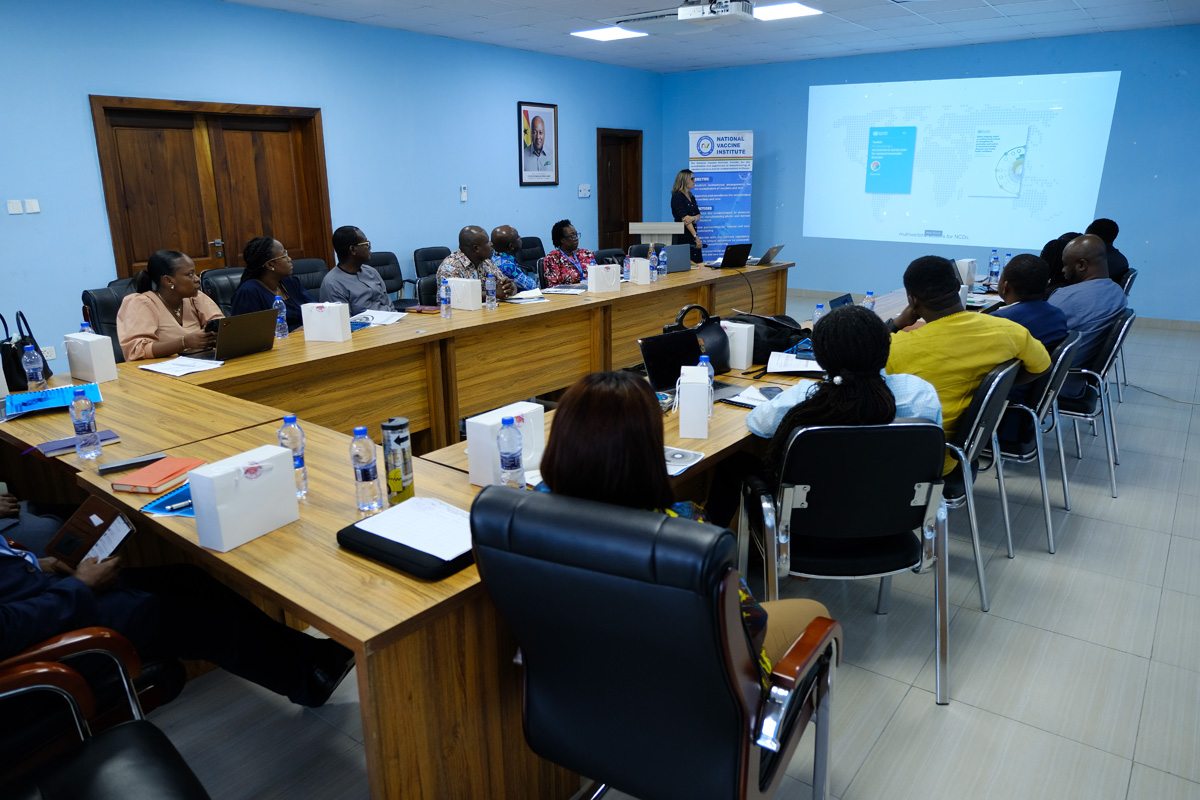
Participants of the Multisectoral National Steering Committee on NCDs at a briefing held in April 2026 in Accra, Ghana. Photo: WHO/Samuel Sieber
“The Multisectoral National Steering Committee on NCDs has been instrumental in bringing government sectors beyond health as well as strategic civil society partners into a joint mechanism, convening actors who would otherwise neither discuss at the same table nor take joint action.”, said Dr Belinda Nimako, Director Policy Planning, Budgeting, Monitoring and Evaluation Directorate (PPBMED) with the Ghana Ministry of Health. “We have managed to place NCDs more prominently on the national political agenda and observe that our messages also resonate with ministries beyond health”, she added.
Several risk factor-specific initiatives have further leveraged multisectoral collaboration across Ghana’s government sector in past years, advancing tobacco taxation and alcohol control, or supporting the countries fiscal and regulatory capacity on healthy diets and physical activity.
Despite the achievements, sustaining effective multisectoral collaboration and ensuring accountability across government actors remains a challenge. In-depth focus groups and interviews revealed that the Committee’s decision-making and advisory function is limited, and there is opportunity to further strengthen oversight for implementation of the Strategic Plan on NCDs.
As a consequence, maintaining the engagement and buy-in from other government sectors has proven difficult, and several ministries requested clearer objectives and defined roles for their participation. High staff-turnover among government representatives and limited understanding of the multisectoral aspects of NCD prevention and control further complicated consistent participation in Steering Committee meetings.
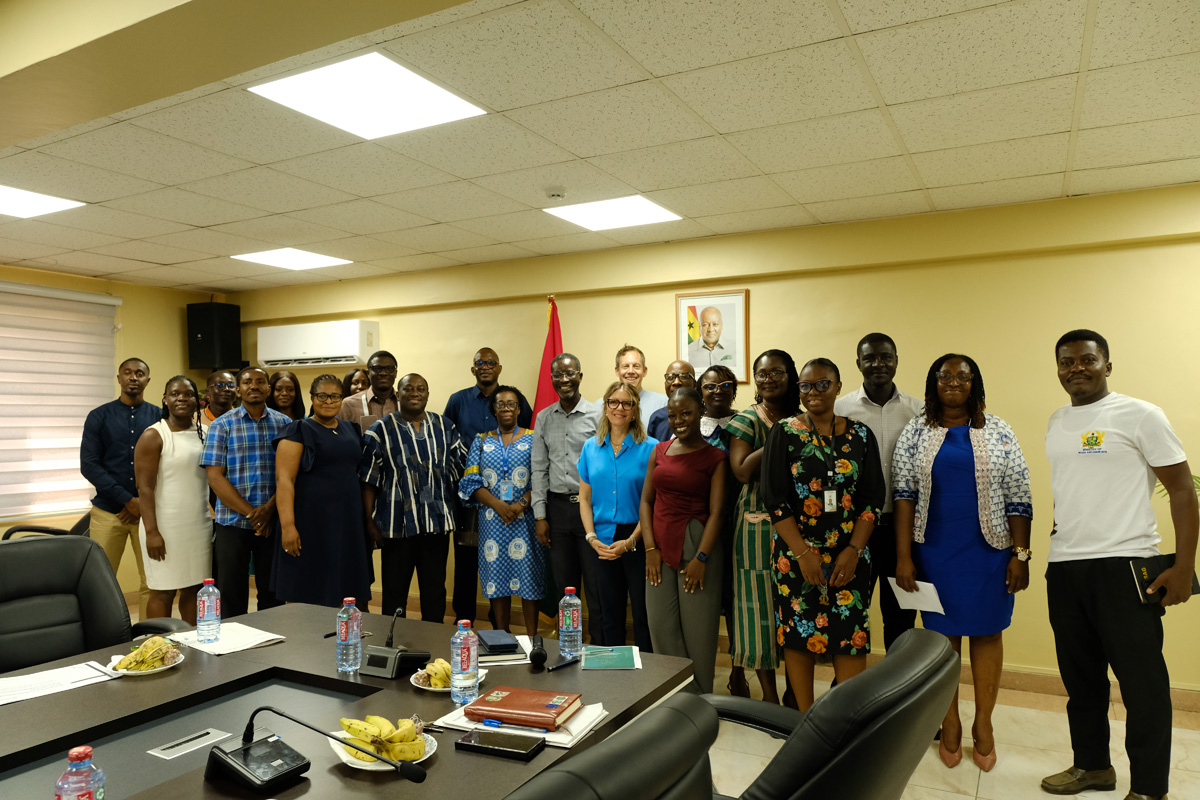
As part of the initial country mission, the WHO team and representatives of the Ministry of Health visited the Ministry of Roads and Highways, among other ministries. Photo: WHO/Samuel Sieber
“A core challenge of multisectoral governance lies in its cross-cutting nature, operating across and between existing government laws and ministry policies. To achieve tangible, multisectoral impact, we need an equally weighted, multisectoral mandate with clear roles, responsibilities and accountability mechanism for participating sectors”, said Dr. Benjamin Nyakutsey, Head for Policy Coordination at the Ministry of Health.
Shifting the narrative on NCDs from a sole health to a broader development issue remains equally critical to achieving true policy coherence “, added Dr Belinda Nimako, “Public sector colleagues need to recognize and actively champion the importance of their contribution to improving health and well-being for the people of Ghana, she emphasized.
Through a project dedicated to strengthening multisectoral governance mechanisms, WHO’s Global Coordination Mechanism on NCDs and the WHO Ghana are supporting the Ministry of Health in strengthening the Steering Committee’s governance structure. This includes clarifying the mandate and terms of reference towards a clear oversight role and renewing engagement with key ministries and relevant partners. The tailored country support builds on a dedicated framework on multisectoral governance, as well as country experiences, case studies and lessons learned from around the world.
“This is a pivotal moment for Ghana to translate high-level political commitment into sustained multisectoral governance and action. With the recently launched Free Primary Health Care Programme, Ghana has created new opportunities to expand routine screening and early detection for hypertension, diabetes, obesity and selected cancers,” noted WHO Representative to Ghana, Dr Fiona Braka.
Following the initial country mission, WHO and the Ministry of Health will validate findings and initial recommendations with all stakeholders and co-design design an enhanced governance structure, capacity building activities, and advocacy products. Strengthening multisectoral collaboration and accountability promises to directly accelerate progress towards healthier populations and sustainable development in Ghana.
WHO gratefully acknowledges the financial contribution from the World Diabetes Foundation to the project on strengthening multisectoral governance on NCDs.
Meaningful Engagement of People with Lived Experiences
30 Mar 2026
Multisectoral Action
17 Dec 2025
Meaningful Engagement of People with Lived Experiences
16 Dec 2025
Multisectoral Action
18 Sep 2025
Meaningful Engagement of People with Lived Experiences
28 May 2025
Meaningful Engagement of People with Lived Experiences
27 May 2025